
Why Your Content Gets Views But No Clients (And the Simple System That Fixes It)
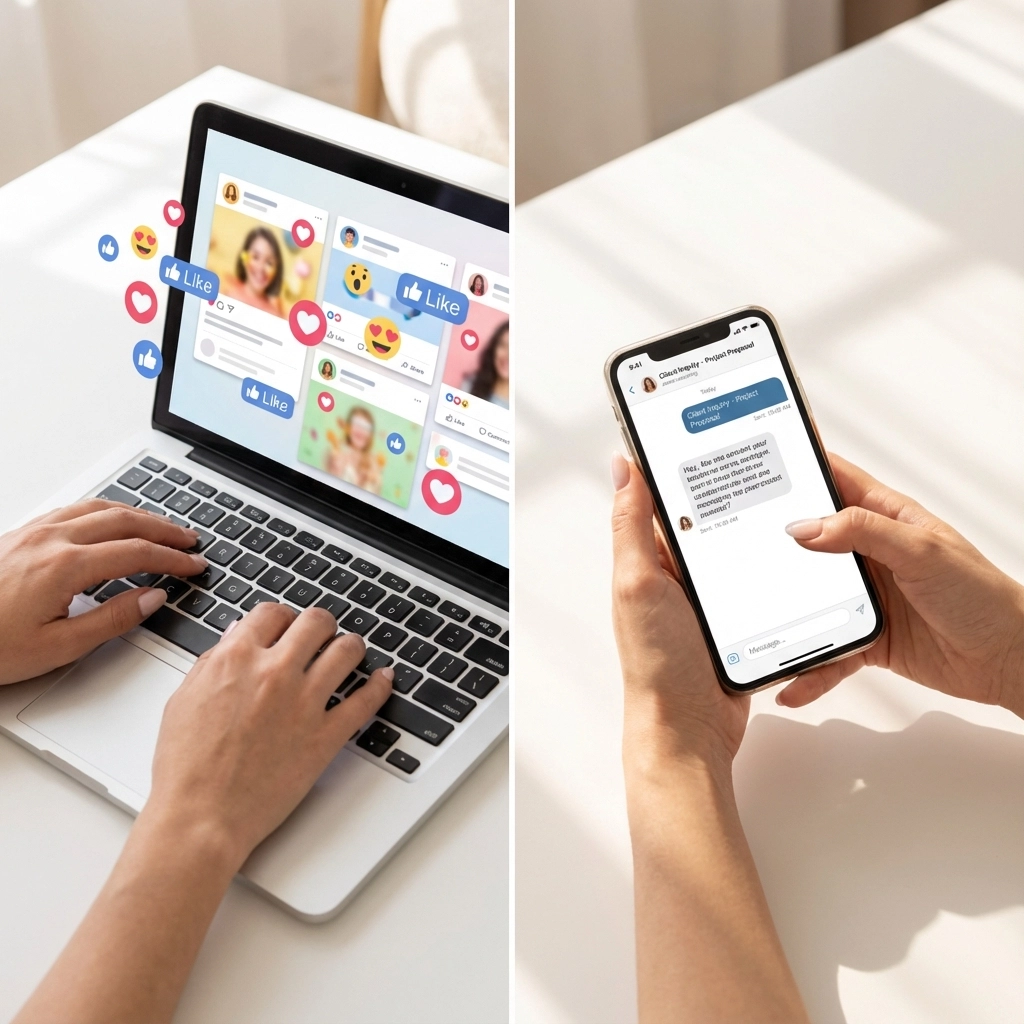
You’re posting consistently. Your content is getting views, likes, and shares. People are telling you how valuable your posts are. But when it comes to actual paying clients? Crickets.
This isn’t because your content sucks. It’s because you’re playing the wrong game entirely.
Most coaches get trapped in the “content creator” mindset instead of the “business owner” mindset. You’re optimizing for engagement metrics that make you feel good but don’t pay your bills. Meanwhile, coaches with half your followers are booking clients daily because they understand something you don’t: not all content is created equal.
Why Your “Good” Content Isn’t Getting You Clients
You’re Only Creating Top-of-Funnel Content
Here’s what nobody tells you about viral content: the more people who relate to it, the less likely those people are to buy from you.
Think about it. Your inspirational quote about “believing in yourself” might get 500 likes, but who’s liking it? People scrolling mindlessly through social media looking for a dopamine hit. These aren’t people actively searching for a solution to a problem you can solve.
You’re attracting browsers, not buyers.
Every time you create content designed to get maximum engagement, you’re essentially shouting “Hey, everyone!” instead of having a focused conversation with someone who actually needs what you’re selling.

Your Content Doesn’t Connect to Your Offer
You post about mindset on Monday, productivity tips on Wednesday, and self-care Saturday quotes on the weekend. But when someone lands on your profile after seeing your content, they have no clue what you actually do or how to work with you.
Your content reads like a lifestyle blog, not a business.
Your ideal client might love your productivity tips, but if she can’t figure out how you can help her solve her specific business problem, she’s moving on to the next coach who makes that connection crystal clear.
You’re Afraid to Be “Too Salesy”
You’ve been told that being promotional will hurt your engagement, so you create 90% value-based content and 10% promotional content. But here’s the problem: your value-based content is training your audience to expect free advice, not paid solutions.
You’re inadvertently positioning yourself as an educational resource, not a service provider. When you finally do mention your programs, your audience feels like you’ve switched gears on them.
You Don’t Know Who You’re Actually Talking To
“I help women entrepreneurs” is not a target audience. It’s a demographic. Your content feels generic because you’re trying to speak to everyone instead of someone specific.
When you don’t know exactly who your ideal client is, where she hangs out online, what keeps her up at night, and what specific transformation she’s desperately seeking, your content becomes white noise in a very crowded space.
The Simple System That Actually Converts Content Into Clients
Stop Creating Content for Content’s Sake
Every single piece of content needs a strategic purpose. Before you post anything, ask yourself: “What specific action do I want someone to take after consuming this content?”
If your answer is “engage with it” or “find it valuable,” you’re missing the point. The action should always move someone closer to becoming a paying client.
Create Three Types of Content (Not Just One)
Awareness Content: This attracts new people to your world. But instead of generic tips, focus on specific problems your ideal client faces that she hasn’t seen addressed elsewhere.
Consideration Content: This is where most coaches drop the ball. Create content for people who already know they need help and are evaluating their options. Case studies, behind-the-scenes of client transformations, and “how I help clients with X problem” posts.
Decision Content: This is content specifically designed for people ready to buy. Clear explanations of your process, client success stories, and direct invitations to work with you.
The ratio that actually works? 40% awareness, 40% consideration, 20% decision content.
Connect Every Post to Your Core Message
Pick one transformation you help clients achieve. Not three. Not five. One. Then make sure every piece of content you create either directly addresses this transformation or supports it.
If you help women entrepreneurs build profitable personal brands, don’t post about morning routines unless you’re specifically connecting it to brand visibility. If you help coaches scale their businesses, don’t share inspirational quotes unless they directly relate to business growth mindset.
Your content should feel like chapters in the same book, not random articles from different magazines.
Use the “So What?” Test
After you write any piece of content, read it and ask “So what?” If someone consumed this content, what would they do next? If the answer is “nothing specific,” rewrite it.
Every post needs a clear next step. Sometimes it’s “comment below with your biggest challenge.” Sometimes it’s “save this post and implement step one today.” Sometimes it’s “if this resonates, let’s chat about how I can help you with this exact problem.”
How Do I Know If My Content Is Converting? (FAQ)
Look beyond vanity metrics. Track:
- DMs asking about your services
- Profile visits after posting
- Email list growth from content
- Discovery call bookings
- Actual client inquiries
If your engagement is high but these metrics are low, your content strategy needs work.
What If I Don’t Have Enough Followers to Get Clients? (FAQ)
You don’t need thousands of followers. You need the right followers. One coach I know consistently books five-figure clients with under 1,000 Instagram followers because every single person following her is a potential ideal client.
Stop optimizing for follower count. Start optimizing for follower quality.
The Content-to-Client Connection System
Week 1: Audit Your Last 20 Posts
Look at your recent content through your ideal client’s eyes. How many posts clearly connect to a problem she has? How many posts make it obvious what you do and how you help? How many posts include a clear next step?
Week 2: Define Your One Thing
Pick the one main transformation you help clients achieve. Write it down. This becomes your content filter. If a post idea doesn’t relate to this transformation, don’t post it.
Week 3: Create Your Content Mix
Plan content using the 40/40/20 ratio. Map out which posts are awareness, consideration, and decision content. Make sure you’re not accidentally creating 90% awareness content.
Week 4: Test and Track
Start paying attention to which posts generate actual business inquiries, not just engagement. Double down on the content styles that convert.
What This Actually Looks Like in Practice
Instead of posting “5 Tips for Better Work-Life Balance,” post “Why High-Achieving Women Burn Out (And the Mindset Shift That Changed Everything for My Client Sarah).”
Instead of sharing a motivational quote, share “The Exact Words I Use When Clients Say ‘I Don’t Have Time’ (And How It Shifts Everything).”
Instead of posting general business tips, post “The One Thing I Wish I’d Known Before Scaling to Six Figures (And How I Help Clients Avoid This Mistake).”
See the difference? Same valuable information, but positioned strategically to attract, nurture, and convert your ideal client.
Your content has the power to build a profitable business. But only if you stop treating it like a hobby and start treating it like the client-attraction system it’s meant to be.
The coaches booking clients from their content aren’t necessarily better coaches than you. They just understand that effective content marketing isn’t about getting the most likes – it’s about having the right conversations with the right people at the right time.
Ready to turn your content into a client-getting machine? Stop creating content that makes you feel popular and start creating content that makes you profitable.
Ready to Break the Double Standards Holding You Back?
If you’re tired of playing by rules that don’t apply equally, here’s what’s next:
Book a Clarity Call with Lisa Benson. Let’s map out your next 90 days with tactical strategy, not theory. We’ll look at where you are, where you want to go, and exactly what needs to happen to get there.
Start with the 9-Line Business Roadmap. Get the framework that helps women service providers scale to consistent $5K-$15K months without burning out or sacrificing boundaries.
Learn About Operation Six-Figure. Our signature coaching system installs repeatable systems for growth—so you can lead like a CEO instead of a scrappy solopreneur barely keeping up.
The double standards are real. But they don’t have to define your business.