Inside my marketing coaching business: strategy, structure, and service
A marketing coaching business requires more than marketing expertise. It needs a clear method, a reliable client-acquisition system, delivery standards, boundaries, leadership, and commercial discipline. Without that infrastructure, the coach spends every week rebuilding the business from scratch.

This is what the work looks like behind the scenes at DeBella DeBall Designs. The content matters, but content is only one part of the operating system. The real job is connecting the buyer, message, offer, sales process, client delivery, and measurement so every part supports the same mission.
Why a marketing coaching business needs a clear mission
Activity is not strategy. Posting every day, adding another funnel, or launching a new offer can create motion without creating qualified demand. Before we build anything, we define the business movement the system must support during the next 90 days.
That objective might be signing a specific number of clients, improving conversion from discovery calls, filling a group program, or reducing the owner’s delivery load. Once the objective is clear, every asset gets a job. Content creates awareness or teaches a decision. Email deepens trust. The website explains the offer. The CRM preserves context and moves the right person toward the next step.
The buyer comes before the content calendar
A strong marketing coaching business does not begin with prompts or post ideas. It begins with a precise understanding of the buyer. We document her current situation, urgent problem, attempted solutions, objections, decision criteria, and the language she uses when the problem is real.
That intelligence comes from discovery calls, client conversations, email replies, search behavior, and the questions people ask before they buy. It is not invented in a branding exercise. When the buyer’s words are captured and organized, content becomes more specific, sales conversations become cleaner, and the offer stops trying to solve five different problems at once.
Positioning has to survive contact with the sales process
A clever headline is not enough. The position must hold from the first post through the sales conversation and into delivery. The problem you name in public should be the problem your offer is equipped to solve. The proof you share should support the promise you make. The call to action should match the reader’s readiness.
Inside the business, we use a message map to keep those pieces aligned. It records the core problem, the point of view, the teaching themes, accurate proof, common objections, and the next action. That map keeps the brand recognizable without forcing every post to sound identical.
The offer needs a method, not a collection of calls
Clients are not paying for calendar access. They are paying for progress. A coaching offer needs a defined result, a clear method, decision points, tools, boundaries, and a way to measure movement.
The method gives the coach a repeatable way to diagnose the problem and sequence the work. It also protects the client from receiving random advice based on whatever came up that week. Customization still matters, but it happens inside a structure strong enough to produce consistent delivery.
Client acquisition is a connected system
Website, social media, email, lead resources, CRM, calendar, and sales cannot operate as separate islands. The handoffs matter. A post should lead somewhere useful. A resource should enter the right follow-up sequence. A booked call should carry enough context for a real conversation. A proposal should trigger an intentional follow-up process instead of depending on memory.
GoHighLevel is the spine of that system in my business. It holds the CRM, forms, automations, email sequences, calendars, pipelines, and client-facing resources. The platform is not the strategy. Its job is to make the strategy executable and visible.
Responsible follow-up protects trust
Follow-up should preserve context, deliver what was promised, and make the next decision clear. It should never turn a human conversation into an automated ambush.
We assign the next action, timing, and owner in the CRM. We use automation for reminders and delivery, not for pretending a relationship exists. Give a shit before you pitch. The offer enters the conversation only when it solves the problem the person has actually described.
Delivery capacity is part of marketing strategy
Signing clients without protecting delivery capacity creates a different kind of failure. Before increasing demand, we look at onboarding time, coaching hours, preparation, support boundaries, team responsibilities, and the number of clients the business can serve well.
This is where leadership replaces hustle. The owner decides what only she can do, what can be documented, what can be delegated, and what should stop. Growth that destroys the client experience or the owner’s health is not a win.
What we measure inside the business
Attention is useful only when it creates qualified movement. We track where leads come from, how many become conversations, how conversations convert, how long decisions take, and which offers produce healthy revenue and delivery.
We also track owner capacity. A tactic that generates revenue but consumes every available hour may not be scalable. The after-action review asks what to sustain, improve, repurpose, automate, delegate, or stop. Evidence decides the next move.
What this looks like during a normal week
A normal week moves between strategy, client delivery, content, sales follow-up, and system maintenance. The work is not glamorous. It is reviewing the pipeline before chasing new visibility, capturing buyer language from calls, tightening a handoff, improving a client resource, and making sure the team knows the next priority.
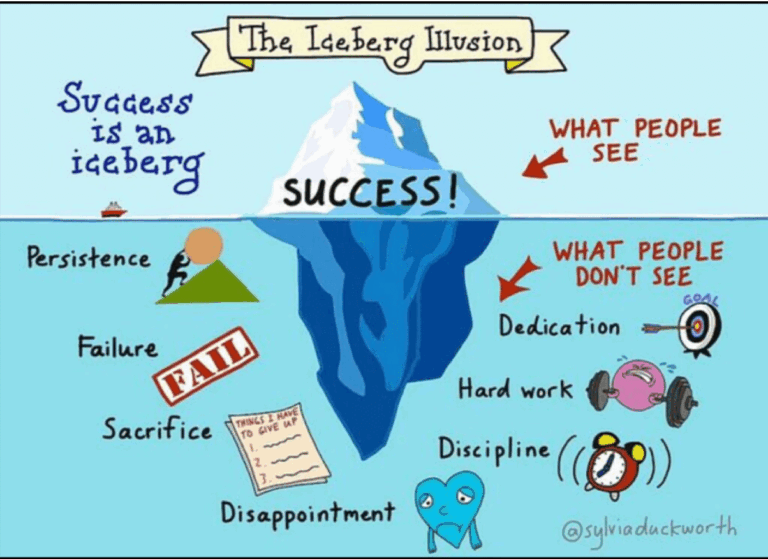
The visible post is the tip of the iceberg. Underneath it sits research, briefing, drafting, editing, approval, publishing, CRM logic, follow-up, delivery, and measurement. When those pieces are documented, the business can improve them. When they live only in the owner’s head, every week becomes an emergency.
Build the system underneath the content
A marketing coaching business becomes sustainable when the way you market matches the way you coach and the infrastructure supports both. Define the buyer and measurable result. Document the method. Build a weekly client-acquisition rhythm. Track delivery capacity, conversion, and retention. Then repair the weakest handoff before adding another tactic.
Use the 9-Line Business Roadmap™ to identify the missing decision and assign the next move. If you need help connecting the message, offer, follow-up, and sales process, book a clarity call. We will diagnose the system first and discuss support only if it fits.